Gradual, sustainable fat loss
Start at the smallest deficit that works, and change one thing at a time.
No deep deficits, no grueling six-day workouts, no overcomplication. The app focuses on your weekly average so you stay on track without the burnout.

-
No promise of a number
The app does not promise a specific amount of weight loss. The same plan will not suit everyone, and anything that says otherwise is selling something.
-
An estimate that gets measured
Maintenance starts as a population estimate and is replaced by what your own logs say once there is a fortnight to read.
-
Nothing happens on its own
Every adjustment arrives as a proposal with its reasoning attached. You approve it, or the plan stays as it is.
The journey
Stage by stage, including the flat parts
-
1
Before you start
A short set of questions, including the ones that matter for safety. If any applies, the app asks you to speak to a professional before it builds anything. Otherwise it takes your height, weight, age, sex, activity level, the pace you want and the days you can train, and builds the calorie target, the macros, a week that fits your equipment, cardio after every session and a step target.
-
2
The first fortnight
Log, and do not judge. Weigh in most mornings, put the food in roughly, log the steps, train the days you chose. Nothing is scored yet: a percentage over days that had no plan to follow would be invented.
-
3
The weekly rhythm
The app reads a weekly average and a weekly direction, never a single morning. Your calorie target stays put while training, protein and steps settle. When something needs to change, one change is proposed with its reason, and it waits for you.
-
4
The last stretch
The pace you chose is the pace it holds, and nothing is made more aggressive to hit a date. If you are losing faster than that pace while reporting poor sleep, hunger or falling strength, the app tells you to eat more.
-
5
The exit, and after it
Calories rise in steps towards your new maintenance, the extra cardio comes down, and training and your step target stay exactly where they are. Expect the scale to move up a little when you eat more: that is glycogen and water, not fat returning.

What the app will not do
- React to one high morning, one big meal or one missed log.
- Reduce your calories before it has increased your activity.
- Apply anything without your approval.
- Ask you to choose a length of time before you have started: the pace decides that.
The method
It reads your record, not the internet
No deficit copied from a video, no cardio block lifted from somebody else's programme, no step goal that assumes every body is the same. The app has its own set of rules, it applies them to your record rather than to an average person, and it names the readings it used before it proposes anything. The figures that come out of those rules are worked out for you, which is why they are on your own screens rather than on this page.
-
Your weekly average
Not one morning and not one meal. A high day has never changed a decision here.
-
Your tape measure
A waist still coming down can hold the scale still while the plan is working perfectly well.
-
Your own answer
When the numbers cannot tell the difference, the app asks you about your measurements and photographs.
-
The week you actually had
Whether your steps and your food ran as planned, in your own numbers rather than in the app's idea of them.
-
Your training
Sessions, sets, and whether the lifts are moving. Falling strength asks for more food, never less.
The stall
When the scale stops moving
A fortnight in which the weekly average does not come down is where most people give up or cut everything at once. This app does four things instead, in this order, and only the last one changes anything.
-
1
Checks the week, not your metabolism
The steps walked and the food logged over the past week, named in your own numbers against your targets. A week that did not run as planned is answered with a properly run week, and the app looks again after a full week of it.
-
2
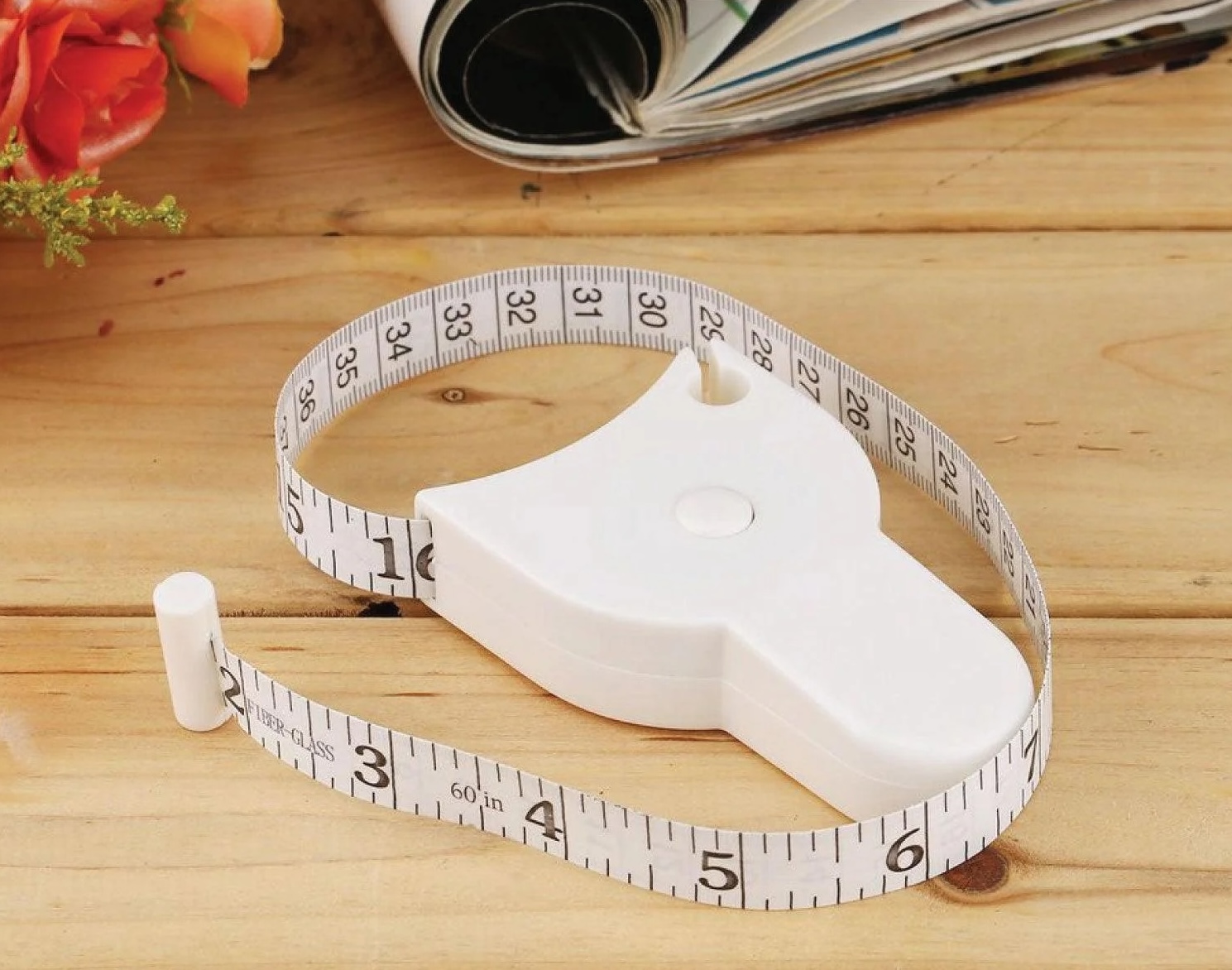
Reads your tape measure
Your measurements against the last month of them. A waist still coming down means the plan is working and nothing changes: fat coming off and muscle going on can hold the scale still for weeks.
-
3
Asks you, if the tape has not moved
Are your measurements still going down, and do your photos look different from a month ago? A yes to either one keeps the plan exactly as it is, and the app asks again after another stalled week.
-
4
Proposes one change, cardio first
The minutes after each strength session grow a little, and one longer session is added on a rest day. Your calorie target does not move. Only after the same check and the same question does the app propose a small reduction in calories, taken from carbohydrate so no food group is removed.
The bar for a stall is small on purpose: a standstill rather than a slow week. Two weekly averages in a row that have not come down mean a plateau here, and a week that is still moving is not one, whatever the size of the movement. One high morning never counts towards any of this.
Four checks, one change at a time. That is what a review looks like here.
Create your planThe week
What it asks of you
Small and repetitive, which is the point. Nothing here takes an hour, and nothing has to be perfect.
- Weigh in most mornings. Three a week is the minimum for an average the app will trust. One high morning changes nothing, and the daily number can be hidden from the chart if it is doing more harm than good.
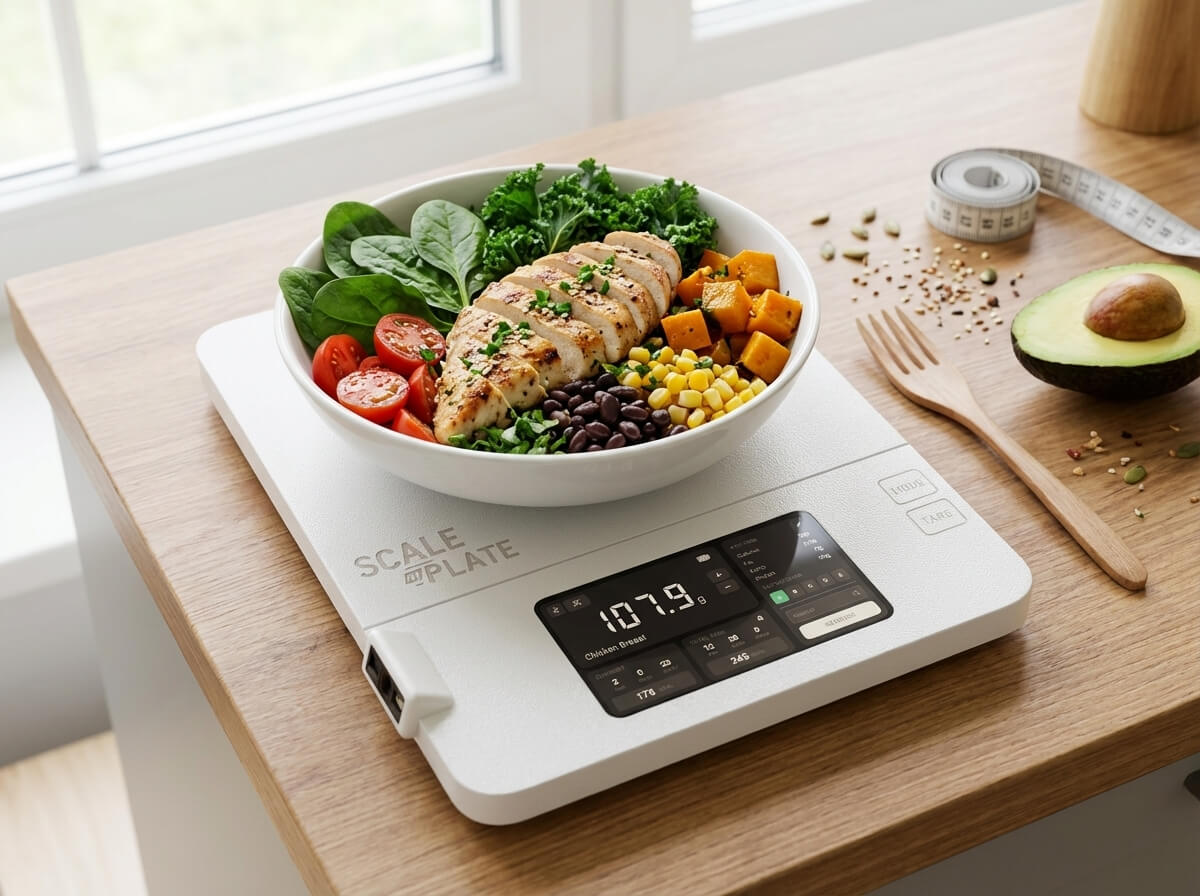
- Log the food, roughly. A rough log every day beats a perfect log for eleven days and a blank week. A day nobody logged is missing evidence, not a day at zero.
- Log the steps, or let the phone do it. The target starts at a level you already reach, never below the amount you already walk, and the plan raises it in steps when the trend asks for more.
- Train the days you chose. The week is built around your days and your equipment. Training is what decides how much of your muscle comes along for the ride.
- Measure every few weeks, photograph monthly. Same angle, same light, same time of day. The tape answers the weeks the scale cannot.
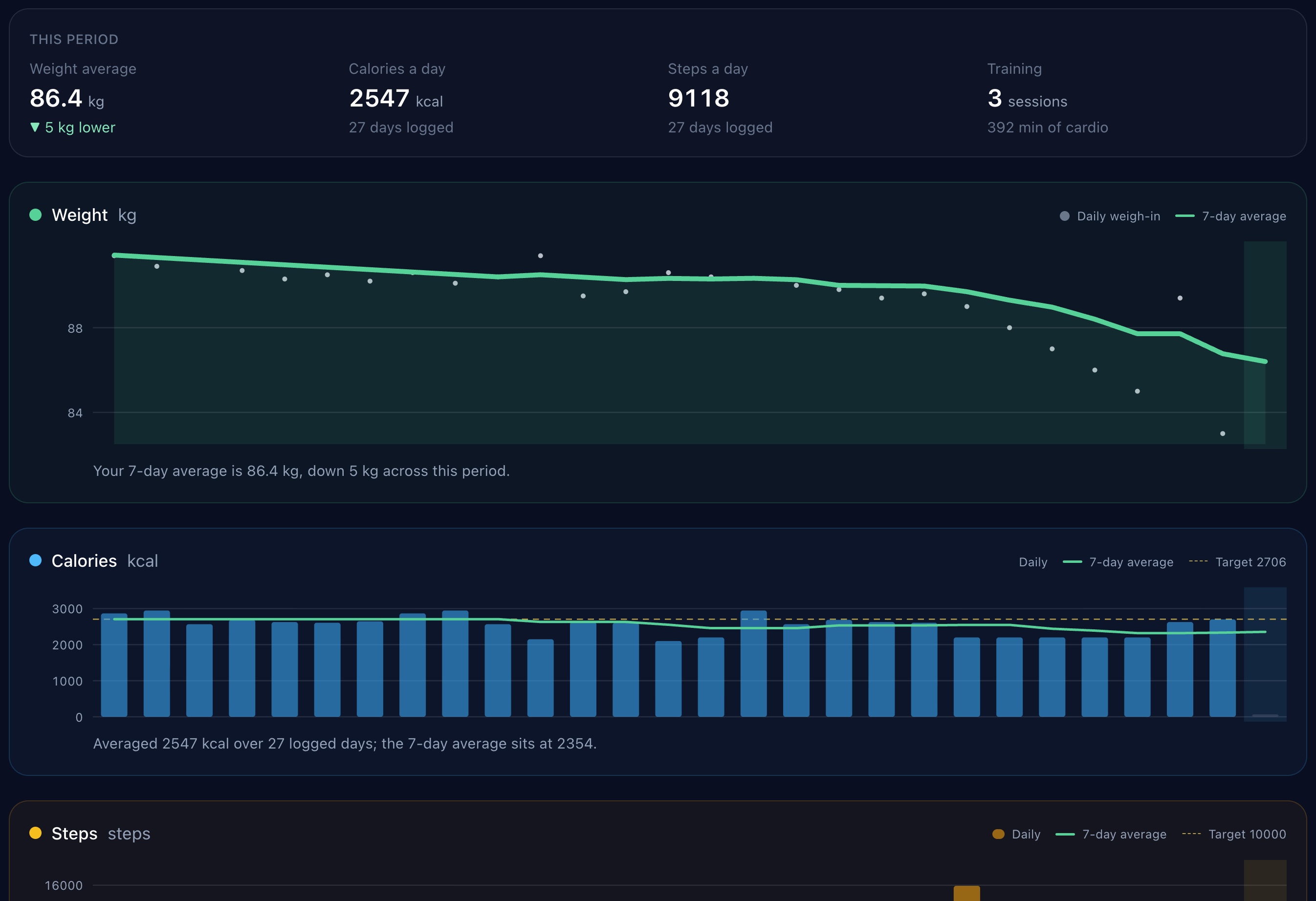
- Look at the chart once a week. Not every morning. The weekly average, the pace you chose as a share of your body weight, and the direction over four weeks.
Training is what you keep
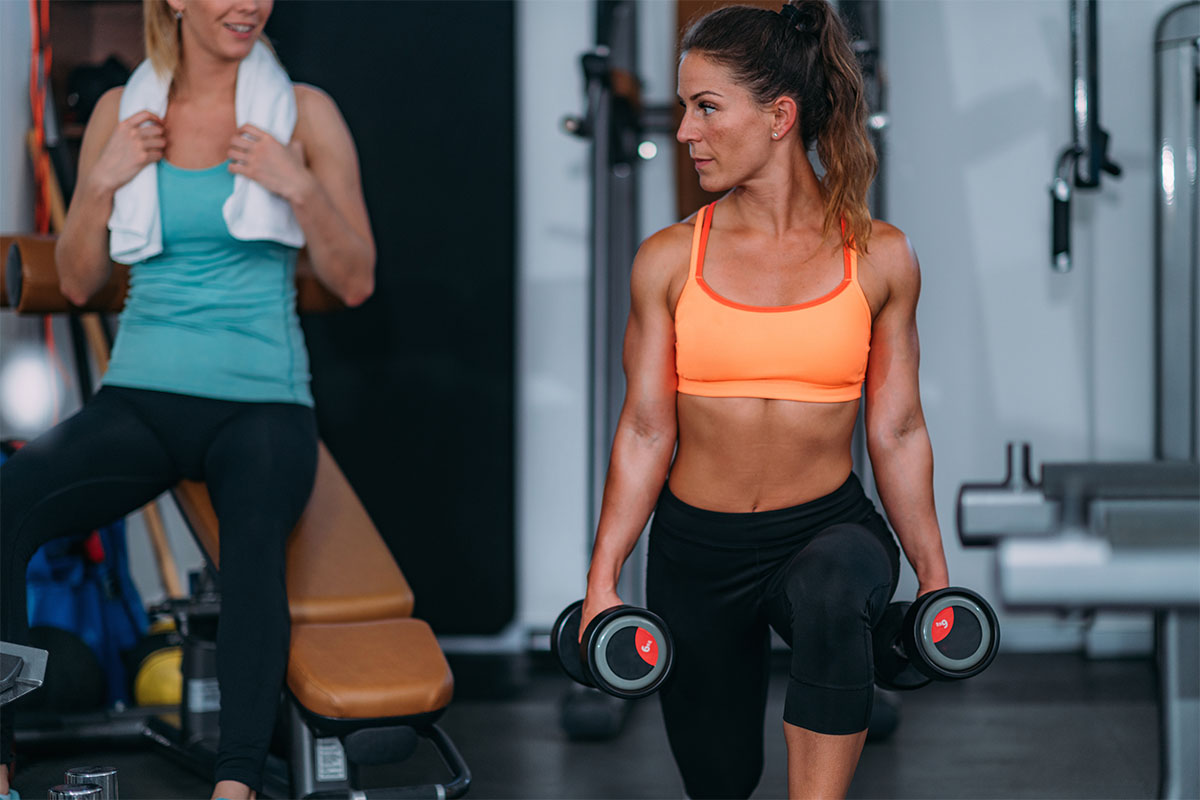
A deficit decides how much fat you lose. Training decides what you look like and what you can do at the end of it, which is why the week is built around the days you can train and the equipment you own, from a rack and a barbell down to a pair of dumbbells and a bench.
Strength is tracked session by session, warm-up sets are kept out of the numbers, and one lighter session is one lighter session rather than a decline. Lifts falling during a deficit is information about the deficit, and one of the signals that asks for calories to go up.
Cardio is minutes at conversation pace after each session, and the ladder raises it before any food is taken away: the easiest lever to add and to reverse.
The coach
On your own, or with a coach
The app is built to run on your own. It reads your record, decides what the next step should be and says why, without anybody else in the loop. A coach answers the part a plan cannot answer by itself.
If you want somebody in your corner
- Motivation, and a push when it matters. Starting is easy; the hard week is somewhere around month four, when the scale is slow and the plan is no longer new. That is what a coach is for, and it is not something an app can do for you.
- A weekly conversation rather than a report. Your coach reads the same record the app decides from — the weekly average, adherence, the plateau verdict, the training — so the conversation is about what happened rather than about what you remember.
- Your coach decides the changes. The app still works out what it would do next and says why; with a coach attached, that recommendation goes to them, and they can apply it, set their own numbers, or keep the plan exactly as it is.
- Every decision is recorded where you can read it, with the reason attached. A plan changed for you is a plan you can see the reasoning behind.
- Your measurements and your photographs are yours to give, one switch each, with the date you gave them. Nothing is shared by default, and taking a switch back closes the door on it immediately.

If you coach people
Make a trainer account and bring the people you already coach with you. You read the same screens the app decides from, leave notes that are dated and never edited, and decide what happens to their plan: apply what the app recommends, set your own numbers, or keep it as it is. Every decision lands on their plan screen with your reason, so the person you coach reads what changed and why rather than being handed a different week.
What the app does not do
It will not find you a coach. There is no directory of trainers here and nobody browses anybody, because the app is built to be run on your own. If somebody already coaches you, or you would like them to, they make an account and the two of you are connected in the app.
The questions
Questions along the way
Twenty kilograms is not twenty weeks of steady progress. These are the questions that come up in the weeks that are not steady, answered with what the app does about them.
I want to go from 100 kg to 80 kg. How long will that take, and will it be a straight line?
It will not be a straight line, and any answer that gives you a date is guessing. Weight comes off in steps: weeks where the scale moves, a fortnight where it does not move at all, a morning where it jumps because of salt, a late meal or a hard session. The app acts on the direction over months, never on one reading.
What it does instead of promising a date is work at a pace you can hold, as a small share of your body weight a week, starting at the smallest deficit below your estimated maintenance rather than at a dramatic one. Forty weeks of that beats a fortnight you abandon.
The plan screen shows an estimate of the last stretch, worked out from the pace you chose, and it moves as your real trend appears. It is an estimate, not a promise, and the app never adjusts its way towards a date.
What should I expect in the first fortnight?
Expect the first week to flatter you. Eating less drops water along with fat, so the first few days can show more than a kilogram, and then the number settles into something slower. That early drop is not a bonus you can keep spending.
Expect the app to be quiet about scoring: for a fortnight it says that nothing is scored yet, because a percentage over days that had no plan to follow is invented. Log the weight, the food, the steps and the training, and the picture appears.
Expect the maintenance figure to be an estimate at this point. It is a population average applied to you, and the app replaces it with what your own logs measure once there are two weeks to read. Weigh in most mornings: a week with one reading in it gives the app nothing to average, and it says there is not enough to read rather than guessing.
My weight jumped up 0.9 kg overnight. Have I undone anything?
No. A 0.9 kg gain of fat would need about 7,000 kcal more than you spent, and no single weigh-in changes anything the app decides. What moved is water and the contents of your gut: salt, alcohol, a late meal, a hard session, short sleep or the point in your cycle.
The app reads a weekly average, which is why one high morning cannot trigger a change. Log it, log the reason if there was one, and leave it.
If seeing the daily number is the problem, the settings screen hides it from the chart and draws the weekly average instead. Every weigh-in is still recorded and still counts, so nothing about the plan changes.
I had a big weekend. What should I do now?
Log it honestly and carry on. One day above target does not undo a week, and the app will not mark you as failing because of it. It does not ask you to compensate with a very low Monday either.
What it does watch is the pattern: if your weekends consistently sit well above your weekdays, it says so, because that is often the whole explanation for a month that looks like a stall.
The one thing worth avoiding is deciding the week is ruined. A plan that cannot survive a wedding is not a plan.
I stopped logging for a week. Do I start again from scratch?
No. Start again today, and fill in the gap if you remember enough to be worth recording: the past-data screen takes a day at a time from notes, and a rough number you are confident in beats a precise one you invented afterwards.
Logging matters for what the app does next rather than for its own sake. When progress stalls, the first question is whether the last week ran as planned — the steps walked and the food logged, in your own numbers. If the record is too thin to read, the app says that before it says anything about your metabolism. A missed week is missing evidence, and the next week supplies it.
How does the app decide what to change, and by how much?
Every instruction comes from your own record rather than from a template. There is no fixed deficit and no prescribed cardio block here: the app reads your weekly average, your tape measure, the food and steps you logged, and your training, then proposes the smallest change that could move the number, and says which of those readings it used.
The order is fixed and it does not change: more activity first, a small reduction in calories after that, and more daily movement last. One change at a time, and only after the app has asked whether the week ran as planned and whether the tape is still moving. A slow week that is still moving is not a reason to change anything.
The figures that come out of that — the calorie target, the cardio minutes, the step goal — are worked out for the body in front of it, which is why they are on your own plan screen rather than on a page written for everybody. You see each one, with the reasoning attached, before anything changes. On your own, you approve it or decline it yourself; with a coach attached to you, the decision is theirs — and every decision is recorded on your own plan screen either way, so you always read what changed and why.
The scale has not moved for two weeks. What does the app do?
First it checks the week rather than the metabolism. Steps and calories are read over the past week, and if either was off the plan it names them in your own numbers: your average day was well short of your step target, or your logged days averaged above your calorie target. A week that did not run as planned is answered with a properly run week, and the app looks again after a full week of it.
If the week did run as planned and the weekly average has still not come down by any real amount, over two consecutive weeks, it reads your measurements next. A waist still coming down means the plan is working and nothing changes.
If the tape has not moved either, it asks you — see the next question — and only then proposes one change, with the reasoning on the page before anything is decided. Nothing is ever applied automatically.
Why does it ask about my measurements and photos?
Because the scale cannot tell fat from muscle, and the tape and the photos can. Somebody losing fat and adding muscle at the same time holds their weight steady, and that is common in the first months of training rather than rare.
So when the weight has stopped moving and the tape has not moved either, the plan screen asks two questions: are your measurements still going down, and do your photos look different from a month ago? A yes to either one keeps the plan exactly as it is, and the app asks again after another stalled week.
A no to both means there is nothing to show for the last stretch, and the first change is proposed. The answer is yours and it can be changed: it stays on the plan screen while the stall lasts, so a mis-tap is corrected the next day.
Why does it not just cut my calories straight away?
Because calories are the hardest lever to take back. Reducing food costs recovery, training performance and adherence, and it has to be reversed during the exit phase.
The order is deliberate: more activity first, then a small reduction in calories, then more daily movement. Adding cardio is easier, cheaper to recover from and removes no food from your week.
There is also a floor. The app will not build a plan below the safe minimum intake it works from, and it asks you to confirm professional guidance before it goes anywhere near the lower one. A very low target is not a faster version of the same plan; it is a harder and less reliable one. Both figures are stated on the plan screen.
What is the first change, and what comes after it?
The first change is cardio: the minutes after each strength session grow a little, and one longer session is added on a rest day. It adds movement without removing food, and it can be undone.
If the weight still has not moved, the app checks the tape and asks the same question again before it goes near your food. Then it proposes a small reduction in calories, taken from carbohydrate so no food group is removed and your protein target does not move.
After that the remaining lever is daily movement, through the step target. Each one arrives as a proposal with its reasoning, and nothing changes until somebody decides it: you, or your coach if one is attached to you. Either way the decision and its reason stay on your own plan screen.
My weight went up two weeks in a row. What then?
A fortnight of going up is assessed exactly like a fortnight of standing still, and for the same reason: it can be muscle gained while fat comes off, water, or a genuine overshoot. A scale cannot tell those apart and the app does not guess.
It checks whether the week ran as planned, in the same numbers. If your logged days were above target, the instruction is to run the week at the target. If the week ran as planned, it reads the tape and asks you about your measurements and photos.
The first change is still more cardio, never fewer calories as a reflex. A rising scale is a reason to look closely, not proof that you are eating more than you think.
Is losing faster better?
No. Faster than the pace you chose costs muscle, strength and mood, and it is more likely to end with the weight coming back. It is also usually water rather than fat, which is why a quick few days are followed by nothing.
The app treats losing too fast as a warning sign. Losing faster than your chosen pace while reporting hunger, poor sleep, low energy or falling strength produces a recommendation to eat more rather than to push on. The rate most people keep is the one they can hold for months rather than weeks.
Can I still eat out, drink, and have a life?
Yes, and the plan assumes you will. Food is logged by the day and judged by the week, so a restaurant meal fits inside a week that is otherwise on plan.
Alcohol is worth counting for three reasons: it carries calories, it adds water to the next morning, and it makes the following day harder to run as planned. Not forbidden, and not free.
What makes twenty kilograms work is repetition rather than precision. A rough log every day beats a perfect log for eleven days and a blank week.
Will I lose muscle and strength on the way down?
Some loss is possible in any deficit, and the app is built to keep as much as it can: protein is set from your target body weight rather than your current one, training continues at the same frequency, and the deficit stays small enough to recover from.
For a good while strength tends to hold or rise, because better technique and a lighter body change what you can do. The training history screen tracks whether your lifts are moving, and one lighter session is treated as one lighter session rather than a decline.
If strength trends down while you are in a deficit, that is information about the deficit rather than about your effort. It is one of the signals that asks for calories to go up.
Who can see what I record?
You, and nobody else unless a coach has been assigned to you. There are no public profiles and no browsing: a coach sees the people an administrator has assigned to them and nobody else, and an account nobody has assigned appears in nobody's list.
A coach sees the record the plan runs on — weekly averages, food and step logs, training — because that is what they are coaching against. Your measurements and your photographs are separate switches, one each, showing the date you turned them on. Nothing is shared by default, taking a switch back closes the door immediately, and changing coach withdraws what was shared, because it was given to a person rather than to a role.
Your photographs are kept away from the public web and served only to you, re-encoded on upload so the location data in the original file is dropped. You can export everything you have entered, and deleting your account removes the records and the photographs.
What happens when I get to 80 kg?
The programme does not stop. The exit phase is its own part of the plan: calories rise in steps towards your new maintenance, the extra cardio comes down, and training and your step target stay exactly as they are.
Expect the scale to move up a little when you eat more. That is glycogen and water rather than fat returning, and it is why calories and activity are changed one at a time instead of both at once.
Afterwards the record stays: your weight, training and food are still there, and maintenance is a plan you keep running rather than a line you cross.
The reasoning, in the app
18 short lessons explain why the app behaves as it does: energy balance, why the scale wobbles, what a stall usually is. The dashboard points you at the one that fits the week you are having.
Some of the reasoning is written up at length, in public: Years in the Gym but Not Seeing Results? Start with the Basics · Fat Loss: Lifestyle Changes, GLP-1 Medicines and Dual Agonists

Before you use this
This app provides general fitness and nutrition guidance. It is not a substitute for medical advice.
The app recommends professional guidance before use if you:
- Are you under 18 years old.
- Are you pregnant or breastfeeding.
- Do you have, or have you had, an eating disorder.
- Do you have diabetes or another condition affected by diet or exercise.
- Are you taking medication that is affected by weight, food or exercise.
- Do you have a significant injury.
- Are you significantly underweight.
- Do you experience compulsive weighing, bingeing or severe food anxiety.
If any of those applies, the app asks you to speak to somebody qualified first, and it will not build a plan below the safe minimum intake it works from whatever you choose.
What this app is not
- Maintenance calories are estimates, not measurements.
- Weight change is not perfectly linear.
- The same plan will not suit everyone.
- Exercise substitutions may be necessary.
- This app cannot diagnose injury, illness or eating disorders.
- Stop exercising and seek appropriate help for concerning symptoms.
Sustainable progress isn't one-size-fits-all. While the app builds your personalized foundation, having a dedicated trainer behind you provides the accountability, structure, and motivation you need to keep pushing forward when things get tough.
If that sounds like a plan you could keep
The questions take a few minutes. You get a maintenance estimate, a calorie target, macros, a week built around your days and your equipment, and a step target you can reach. Change anything afterwards, and nothing changes without you. Or work out how long it would take before you decide.
Message me Close
Send me a message
A question about the app, a problem signing up, or something this page does not answer. I read every one.